
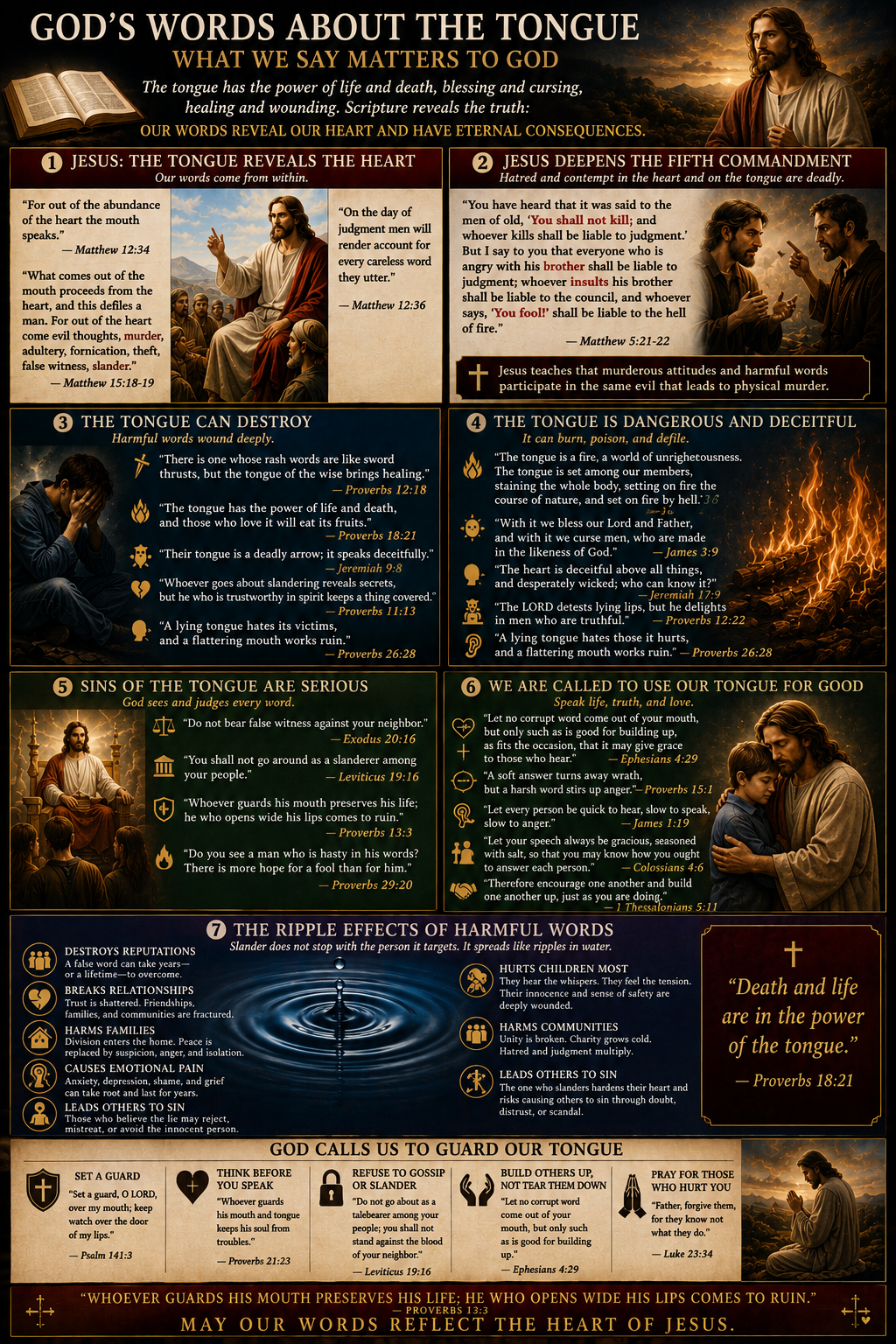
The power of the tongue is one of the greatest gifts and responsibilities entrusted to man. Though small, it has the ability to shape lives, influence souls, strengthen or weaken virtue, and cooperate either with God’s grace or with sin. Scripture consistently teaches that our words are never insignificant—they reveal the condition of our hearts and bear consequences both in this life and in eternity.

Our Lord teaches:
“Out of the abundance of the heart the mouth speaks.” (Matthew 12:34)
“By your words you will be justified, and by your words you will be condemned.” (Matthew 12:37)
Words are more than sounds; they are the outward expression of the soul. They reveal what we truly love, fear, believe, and desire. A heart filled with charity naturally speaks life, while a heart consumed by pride, bitterness, or impurity eventually reveals itself through speech.
The transformation of our words begins with the transformation of our hearts.
Scripture says:
“Death and life are in the power of the tongue.” (Proverbs 18:21)
This does not mean words possess magical power in themselves. Rather, because words express the intellect and the will, they profoundly influence both ourselves and those around us.
Words can bring life by:
A single sentence spoken in love and truth can change the course of a person’s life.


The Church teaches that many sins cause injury to our neighbor and therefore require reparation. One who has sinned must “do what is possible in order to repair the harm.” Forgiveness removes the guilt of sin, but it does not erase the responsibilities of justice. Love of God necessarily includes a sincere desire to restore, as far as possible, what our sins have damaged (cf. CCC, 1459).
Yet words can also bring death by:
The tongue can wound more deeply than a sword, leaving scars that endure for years.

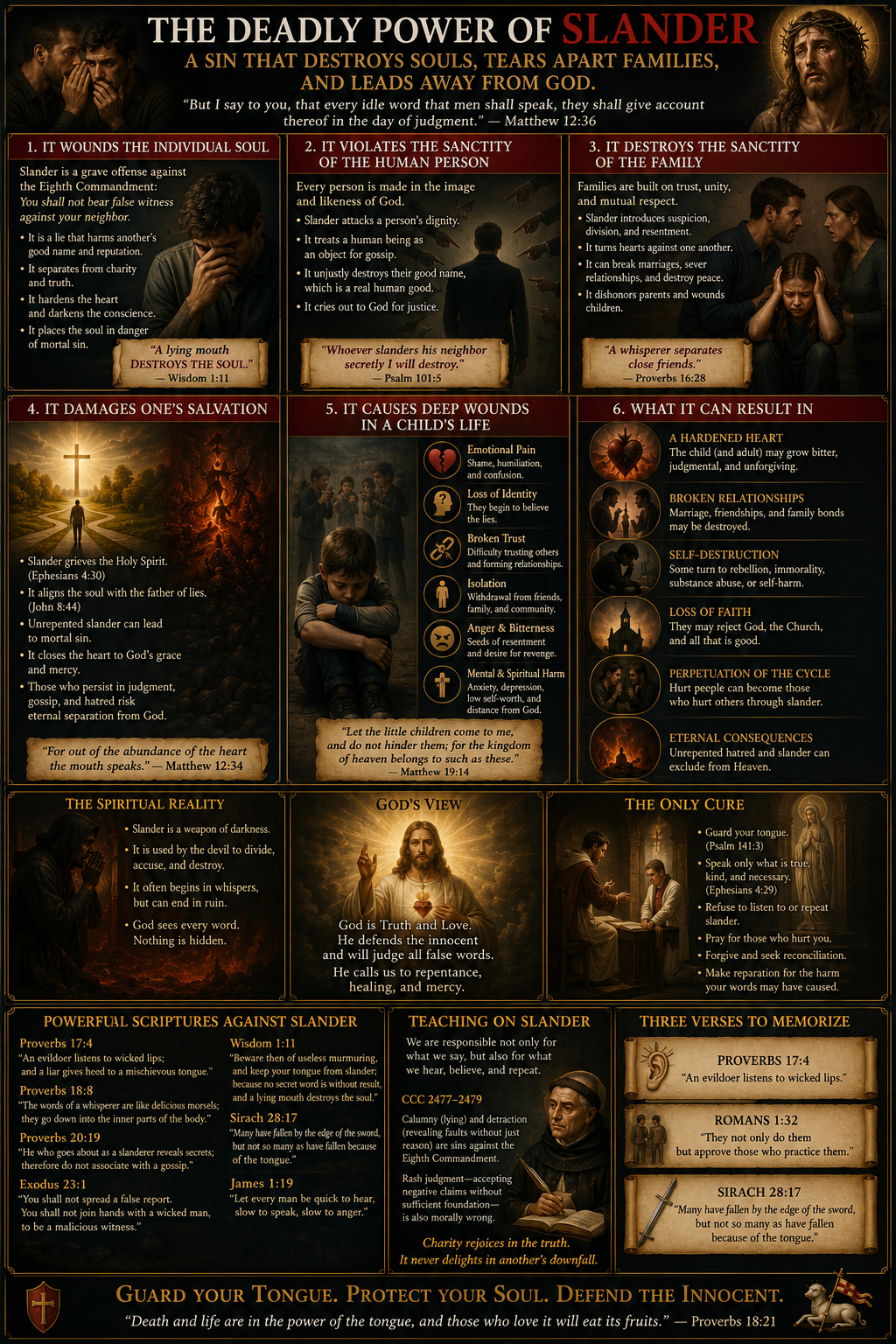
The power of words is far greater than most people realize. They are not merely sounds carried on the air; they are the outward expression of the intellect and the will. Through them we reveal what we believe, what we love, and whom we serve. They carry truth or falsehood, blessing or cursing, charity or hatred. Every word is, in some measure, a moral act.
Scripture declares:
“Death and life are in the power of the tongue.” (Proverbs 18:21)
This is not poetry alone. It is a profound spiritual reality.
God Himself chose to create through His Word.
“And God said… Let there be…” (Genesis 1)
Man is made in the image of God. While our words do not create reality as God’s do, they truly participate in shaping reality. They build or destroy relationships, strengthen or weaken virtue, illuminate truth or spread darkness, and influence the eternal destiny of souls.
Every word leaves a mark.
Some words heal wounds that have festered for decades.
Others create wounds that remain for a lifetime.
A child repeatedly told he is worthless may carry those words into adulthood. A sinner who hears, “God has not abandoned you,” may begin the journey back to Him. Nations have gone to war because of words. Souls have been converted because of a single sentence spoken in charity.
Words shape history because they first shape hearts.
St. James compares the tongue to the bit placed in a horse’s mouth and the rudder that steers a great ship.
A tiny member directs an entire life.
This is because speech does not merely reveal character—it also forms it.
Every lie makes the next lie easier.
Every complaint deepens discontent.
Every act of gossip strengthens pride.
Every word of gratitude enlarges the heart.
Every confession of truth strengthens courage.
Every blessing increases charity.
Our speech is one of the primary ways we train our souls, either toward virtue or toward vice.
There are deaths more terrible than physical death.
Hope can die.
Trust can die.
Innocence can die.
Friendships can die.
Families can die.
Faith can be extinguished.
A soul can be led away from God.
A single false accusation can destroy a reputation built over decades.
A cruel insult can convince someone they have no worth.
False teaching can separate countless souls from the truth.
Scandal can weaken the faith of generations.
This is why Scripture speaks so forcefully about the sins of the tongue. The wounds inflicted by words often penetrate more deeply than physical wounds because they strike the heart.
Our Lord gives one of the most sobering warnings in all of Scripture:
“On the day of judgment men will render account for every careless word they utter.” (Matthew 12:36)
Every word matters because every word proceeds from the will.
No careless insult disappears.
No hidden lie is forgotten.
No act of slander simply evaporates.
Likewise, no quiet encouragement is unnoticed.
No sincere apology is wasted.
No word spoken in defense of truth is lost.
Everything spoken enters eternity.
Words are among the enemy’s oldest weapons.
The fall of humanity began with a conversation.
The serpent did not begin with violence.
He began with deception.
“Did God really say…?”
Every temptation since has followed that pattern.
Lies reshape perception.
Distorted language makes sin appear reasonable.
False promises conceal destruction.
Accusation produces despair.
Condemnation extinguishes hope.
The evil one is called “the father of lies” because falsehood is his native language. Whenever we knowingly speak lies, sow division, mock holiness, curse others, or delight in tearing people down, we cooperate with the very pattern by which he seeks to destroy souls.
Habitual speech rooted in anger, blasphemy, hatred, impurity, or despair does more than express darkness—it gradually disposes the soul toward it.
Just as evil spreads through words, so does grace.
Faith comes through hearing.
Truth breaks deception.
Forgiveness ends cycles of hatred.
Encouragement strengthens the weary.
Correction offered in charity rescues another from error.
Prayer invites the soul toward God.
Blessing calls down God’s mercy.
Throughout history, countless conversions have begun because someone spoke the truth with love.
One holy conversation has often accomplished what years of argument could not.
Speech is never isolated from the soul.
Words repeated become thoughts.
Thoughts embraced become habits.
Habits become character.
Character shapes destiny.
This is why guarding the tongue is not merely about avoiding offensive language. It is about guarding the entire direction of one’s life.
If the mouth is continually filled with gratitude, praise, truth, humility, and mercy, the heart gradually becomes those things.
If it is continually filled with resentment, complaint, gossip, lust, mockery, and pride, the soul is slowly conformed to those realities instead.
The tongue is both a mirror and a sculptor of the heart.
The tongue reaches its greatest dignity when it glorifies God and serves His truth.
It was given to proclaim what is good, defend what is true, comfort the afflicted, correct the wandering, forgive the repentant, encourage the weary, and praise the Creator.
Every conversation is an opportunity either to cooperate with grace or to resist it.
Every word either moves ourselves and others a little closer to God or a little farther away.
The power of the tongue is therefore deadly in the fullest and most real sense—not because words possess magical force, but because they engage the deepest faculties of the human person. They shape minds, direct hearts, strengthen virtue or vice, influence other souls, and bear consequences that extend beyond this life into eternity.
As St. James concludes:
“With it we bless the Lord and Father, and with it we curse men, who are made in the likeness of God… My brethren, this ought not to be so.” (James 3:9–10)
The tongue is small, but nothing about it is insignificant. It has the power to wound or to heal, to deceive or to reveal truth, to lead toward life or toward death. Therefore, every word should be spoken as though it echoes into eternity—for it does.

Human beings are inherently social. We develop our understanding of ourselves, others, and the world through continual interaction with those around us. Consequently, the words, attitudes, and judgments expressed by families, peers, institutions, media, and society are not merely external influences—they become part of the environment that forms human thought and behavior.
Modern psychology has consistently demonstrated that people are deeply influenced by social pressure. Individuals naturally seek acceptance, belonging, and approval while avoiding rejection, ridicule, and exclusion. This tendency is not inherently disordered; it reflects the social nature of the human person. However, when social approval becomes detached from truth, collective speech can become a powerful force for both personal and societal corruption.
Research in social psychology has repeatedly shown that people frequently conform to the beliefs and behaviors of a group, even when those beliefs are objectively false. Solomon Asch’s conformity experiments demonstrated that individuals often deny what they plainly perceive in order to agree with a unanimous group. Stanley Milgram’s obedience studies further revealed that social authority can lead ordinary individuals to participate in actions they would otherwise judge to be morally wrong. More recent research on social norms has continued to show that repeated exposure to widely accepted beliefs and behaviors gradually shifts what individuals perceive as normal, acceptable, and even morally good.
Language plays a central role in this process.
Ideas become familiar through repetition.
Repeated ideas become socially accepted.
Accepted ideas become cultural norms.
Cultural norms shape individual beliefs.
Individual beliefs influence personal choices.
Repeated choices gradually reshape both the individual and society.
This process is well understood in psychology through concepts such as social learning, normative influence, and cognitive reinforcement. Human beings tend to internalize the language and values that surround them, especially when those messages are repeated by trusted authorities or widely affirmed by their communities.
Neuroscience provides a complementary explanation. Because of neuroplasticity, repeated exposure to particular patterns of thought and language strengthens corresponding neural pathways. Over time, ideas that were once unfamiliar begin to feel intuitive simply because they have become familiar. Familiarity is often mistaken for truth, even when objective evidence is lacking.
This has profound moral implications.
When a culture repeatedly celebrates pride, selfishness, impurity, dishonesty, or contempt for others, these attitudes gradually become normalized. Likewise, when truth is consistently mocked, virtue ridiculed, or goodness portrayed as weakness, many individuals slowly lose the ability to recognize these distortions. The repetition itself does not make falsehood true, but it makes falsehood appear ordinary.
Scripture repeatedly warns of this dynamic.
St. Paul cautions:
“Do not be conformed to this world, but be transformed by the renewal of your mind.” (Romans 12:2)
Transformation and conformity both begin with what repeatedly enters the mind. The battle is therefore not only over actions but over the ideas, words, and narratives that shape those actions.
The Book of Proverbs likewise teaches that “death and life are in the power of the tongue” (Proverbs 18:21). This principle extends beyond individual conversations. Entire communities are shaped by the words they habitually speak, celebrate, and tolerate. Public discourse influences what people admire, what they reject, and ultimately how they live.
Social pressure can therefore become a significant source of psychological suffering. Persistent ridicule, exclusion, public humiliation, or cultural messages that assign a person’s worth according to appearance, achievement, wealth, status, or ideological conformity have all been associated with increased rates of anxiety, depression, loneliness, and hopelessness. While these factors alone do not explain every instance of psychological distress or suicide, they contribute to an environment that can weaken resilience and obscure a person’s inherent dignity.
From a theological perspective, this process is even more significant. Every human person possesses an objective dignity that does not depend upon public opinion. Yet societies frequently attempt to redefine human worth according to changing cultural standards. When enough voices repeat the same falsehood, many people begin to believe that their value truly depends upon success, popularity, productivity, or acceptance by others. These are lies about the human person, but they become psychologically powerful when continually reinforced.
Conversely, communities that consistently speak truth, extend mercy, encourage virtue, defend the vulnerable, and remind one another of their God-given dignity create conditions that strengthen both individual flourishing and the common good. Truthful speech does not merely communicate reality—it helps people remain rooted in it.
For this reason, speech carries both personal and social responsibility. Every conversation contributes, however slightly, to the moral culture in which others live. Every word either strengthens truth or weakens it, builds charity or fosters division, reinforces hope or deepens despair. Over time, these countless individual acts of speech accumulate into the culture that forms the next generation.
The formative power of words therefore extends far beyond individual conversations. Through repetition, social reinforcement, and cultural acceptance, words shape minds, influence consciences, establish norms, and ultimately help determine the moral direction of entire societies.

Human beings are not only shaped by their own thoughts but also by the communities in which they live. The beliefs, expectations, judgments, and values continually communicated by family, peers, institutions, media, and society influence how individuals understand themselves and their place in the world.
This influence becomes particularly significant when social pressure repeatedly communicates that a person’s worth depends upon external standards such as success, appearance, popularity, wealth, productivity, or ideological conformity. When these messages are reinforced over many years, they can gradually become internalized, especially by those who are already vulnerable because of trauma, isolation, mental illness, or other forms of suffering.
Psychological research consistently identifies hopelessness, perceived burdensomeness, and social disconnection as among the strongest predictors of suicidal ideation. Contemporary theories of suicide, including Thomas Joiner’s Interpersonal Theory of Suicide, propose that the combination of believing “I do not belong” and “Others would be better off without me” can significantly increase suicide risk, particularly when accompanied by other contributing factors.
Social pressure can contribute to the formation of these beliefs.
A culture that repeatedly communicates that human value must be earned through performance may leave those who fail feeling worthless.
A culture that rewards appearance above character may convince those who do not meet its standards that they are unlovable.
A culture that celebrates autonomy while weakening families and communities may increase loneliness and isolation.
A culture that reduces the human person to utility or productivity may lead the elderly, disabled, unemployed, or chronically ill to believe that their lives have become burdensome.
These messages are rarely communicated in a single conversation. Rather, they accumulate through thousands of interactions, public narratives, entertainment, advertising, social media, education, and everyday discourse. Over time, repeated exposure can influence how individuals interpret both themselves and their circumstances.
Neuroscience helps explain why this occurs. The brain continually adapts to repeated experiences, strengthening patterns of thought that are frequently rehearsed. As certain beliefs become more deeply established, they increasingly shape emotional responses, decision-making, and expectations about the future. In this way, persistent exposure to messages of inadequacy, rejection, or hopelessness can make despair feel increasingly plausible, even though those messages remain objectively false.
From a theological perspective, the danger extends beyond psychology. Every human being possesses an inherent and inviolable dignity because each person is created in the image and likeness of God. This dignity cannot be increased by success nor diminished by failure. Yet when society repeatedly teaches otherwise, many individuals begin to judge themselves according to false standards rather than according to the truth of their identity.
Despair often begins when falsehood is accepted as reality.
The belief that one’s life has no value.
The belief that one is unloved.
The belief that one is beyond forgiveness.
The belief that one’s future contains no hope.
These are not merely psychological conclusions; they are false judgments about the human person. When accepted, they can obscure the truth that every life possesses objective worth and that no suffering, failure, or rejection can erase that dignity.
This does not mean that social pressure alone causes suicide. Suicide is a complex tragedy involving multiple interacting biological, psychological, social, and spiritual factors. However, social pressure can become one of the conditions that weakens hope, distorts identity, and intensifies isolation, thereby increasing vulnerability in those who are already suffering.
Conversely, societies that consistently affirm the inherent dignity of every person, strengthen authentic relationships, encourage mutual responsibility, and proclaim that every human life possesses enduring value help cultivate one of the most important protective factors against despair: hope grounded in truth.
For this reason, words spoken in homes, schools, churches, workplaces, and public life are never inconsequential. They help shape the moral and psychological environment in which people either discover reasons to live or struggle to find them. Every culture teaches its members what they are worth. When that teaching is false, the consequences can be profound. When it is true, it becomes a source of resilience, healing, and life.

Speech is never isolated from the soul. Every word we speak is both an expression of who we are and a force that helps shape who we are becoming.
What begins on the lips does not remain on the lips.
Words repeated become familiar thoughts.
Familiar thoughts become accepted beliefs.
Beliefs guide our choices.
Repeated choices become habits.
Habits form character.
Character shapes destiny.
This is why guarding the tongue is not merely about avoiding offensive language—it is about guarding the entire direction of one’s life.
Modern neuroscience has shown that the brain is remarkably adaptable throughout life, a property known as neuroplasticity. Repeated thoughts, emotions, and behaviors strengthen corresponding neural pathways. The more often a pattern is repeated, the more natural and automatic it becomes. In other words, what we consistently think, say, and do gradually rewires the brain itself.
Psychological research likewise demonstrates that language is not simply descriptive—it is formative. The words we repeatedly speak influence how we perceive ourselves, others, and the world. Habitual negative speech reinforces patterns of pessimism, anxiety, resentment, and hopelessness, while habitual expressions of gratitude, hope, forgiveness, and compassion reinforce healthier emotional and cognitive patterns. Studies in cognitive psychology have long shown that our internal dialogue and outward speech reinforce one another, creating cycles that either strengthen virtue or deepen vice.
Research on gratitude provides one striking example. People who intentionally practice verbal expressions of thankfulness over time often experience measurable increases in well-being, stronger relationships, greater resilience, and reduced symptoms of depression and anxiety. Likewise, studies of chronic complaining suggest that repeatedly dwelling on negative experiences can reinforce stress responses and make negative patterns of thinking more automatic.
These findings do not suggest that words possess magical power. Rather, they confirm something Scripture has taught for thousands of years: repeated speech shapes the person who speaks it.
The spiritual reality extends even deeper.
Every word spoken is an act of the intellect choosing what it presents as true and an act of the will embracing or rejecting a particular good. When a person repeatedly speaks truth, humility, mercy, gratitude, and praise, he is not merely describing these virtues—he is exercising them. Like every virtue, they grow stronger through repeated acts.
The opposite is equally true.
Every lie makes honesty more difficult.
Every complaint makes gratitude less natural.
Every act of gossip trains the heart to judge rather than love.
Every sarcastic insult weakens charity.
Every impure conversation dulls purity.
Every word of pride feeds self-love.
Over time, vice becomes easier because it has been practiced.
Conversely, every blessing strengthens charity.
Every sincere apology strengthens humility.
Every word of encouragement strengthens love.
Every proclamation of truth strengthens courage.
Every prayer deepens trust in God.
The tongue is therefore both a mirror and a sculptor of the soul. It reveals the heart as it is while simultaneously helping to form the heart that will be.
This is why Scripture warns so repeatedly about speech. Words do not simply leave our mouths—they leave an imprint on our minds, shape our habits, influence those around us, and gradually conform us either toward truth and holiness or toward deception and sin.
In this sense, every conversation is an act of formation. We are never merely talking. We are becoming.

St. James writes:
“If anyone makes no mistakes in what he says, he is a perfect man.” (James 3:2)
He compares the tongue to:
Though small, the tongue directs the whole course of a person’s life.
One careless word can destroy years of trust.
One humble apology can restore a broken relationship.
One courageous proclamation of truth can awaken a soul.
Our Lord warns:
“On the day of judgment men will render account for every careless word they utter.” (Matthew 12:36)
Every word participates in one of two kingdoms:
Speech is never morally neutral. Our words either cooperate with grace or resist it.


Throughout Scripture, one of the most common forms of suffering permitted by God is not physical pain but false accusation, rejection, and slander. The lives of Joseph, Moses, David, Job, Jeremiah, the prophets, the apostles, and ultimately Jesus Christ reveal a consistent pattern: those most faithful to God often endured the unjust judgment of others.
This raises an important question. Why would God permit one of the most painful forms of human suffering to become an instrument of sanctification?
The answer begins with understanding what slander attacks.
Unlike physical suffering, slander strikes directly at a person’s identity, reputation, relationships, and standing within the community. Human beings are naturally ordered toward truth, communion, and being rightly known. False accusation attacks all three simultaneously. It seeks to separate a person from the truth about himself and from the trust of others.
Precisely because slander attacks these deeply human goods, God can use the suffering it causes to purify attachments that often remain hidden during ordinary life.
One of the deepest attachments of fallen human nature is the desire to be approved, admired, justified, and vindicated by other people. While the desire to be loved is good, the desire to derive one’s identity or peace from human approval can become disordered. Scripture repeatedly warns against this attachment.
Jesus asks:
“How can you believe, who receive glory from one another and do not seek the glory that comes from the only God?” (John 5:44)
As long as a person’s interior peace depends primarily upon the opinions of others, that peace remains fragile. Praise produces elation; criticism produces discouragement; slander produces devastation. The soul remains dependent upon judgments that are neither stable nor ultimately authoritative.
God therefore permits circumstances that gradually transfer the soul’s dependence from human approval to divine truth.
Slander accomplishes this purification in a unique way because it removes a person from the ability to defend his reputation by natural means alone. False accusations often cannot be completely corrected. Misunderstandings may persist for years. In many cases, complete vindication never occurs during earthly life.
The person is therefore confronted with a profound spiritual question:
Whose judgment ultimately determines my identity?
If identity rests upon public opinion, slander becomes unbearable because it appears to destroy the self. If identity rests upon God’s knowledge of the soul, then although slander remains deeply painful and objectively unjust, it no longer possesses the power to define the person.
For this reason, Scripture consistently presents unjust suffering as a means of purification.
Job lost not only his possessions and health but also his reputation. His friends assumed his suffering proved hidden wickedness.
David was repeatedly accused of crimes he did not commit.
Jeremiah was mocked, imprisoned, and regarded as a traitor.
St. Paul was continually misrepresented by those opposing his ministry.
Above all, Jesus Christ—the only perfectly innocent man—was called a blasphemer, deceiver, glutton, drunkard, Sabbath-breaker, and one possessed by a demon. At His trial, false witnesses were deliberately sought to condemn Him.
The pattern is unmistakable.
Holiness does not exempt a person from false judgment. Rather, increasing conformity to Christ often includes sharing in His experience of being misunderstood, rejected, and falsely accused.
This purification extends beyond detachment from human approval.
Slander also reveals what remains hidden within the heart.
When falsely accused, pride seeks vindication at all costs.
Anger seeks retaliation.
Fear seeks self-preservation.
Bitterness seeks revenge.
Yet grace invites another response: humility, patience, forgiveness, confidence in God’s justice, and unwavering commitment to truth.
In this way, slander does not create these dispositions; it reveals them. Like fire refining precious metal, unjust accusation exposes the impurities that ordinary circumstances often leave concealed. Once revealed, they can be surrendered to God’s grace and gradually transformed.
There is also a profound participation in the life of Christ.
Christ did not merely suffer physical pain. He endured public humiliation, false testimony, betrayal by friends, abandonment by disciples, mockery by soldiers, and condemnation by the very people He came to save. When a disciple suffers unjust accusation while remaining faithful to truth and charity, he participates in one of the most intimate dimensions of Christ’s Passion.
This is why Scripture teaches:
“When he was reviled, he did not revile in return; when he suffered, he did not threaten, but continued entrusting himself to him who judges justly.” (1 Peter 2:23)
The Christian response to slander is therefore neither passive resignation nor denial of injustice. Slander remains objectively sinful and should be opposed through legitimate means whenever possible. However, when it cannot be prevented or corrected, it becomes an opportunity to entrust one’s reputation, identity, and final vindication entirely to God.
Ultimately, the deepest work accomplished through permitted slander is the purification of identity itself. God gradually teaches the soul to live from His judgment rather than the world’s, to seek His approval above human praise, and to find peace not in being rightly understood by everyone, but in being fully known and loved by Him.
In this way, God does not will slander as an evil. Rather, He permits it because, in His providence, He is able to transform one of the greatest injustices inflicted by man into one of the most profound means of conforming a soul to Jesus Christ.
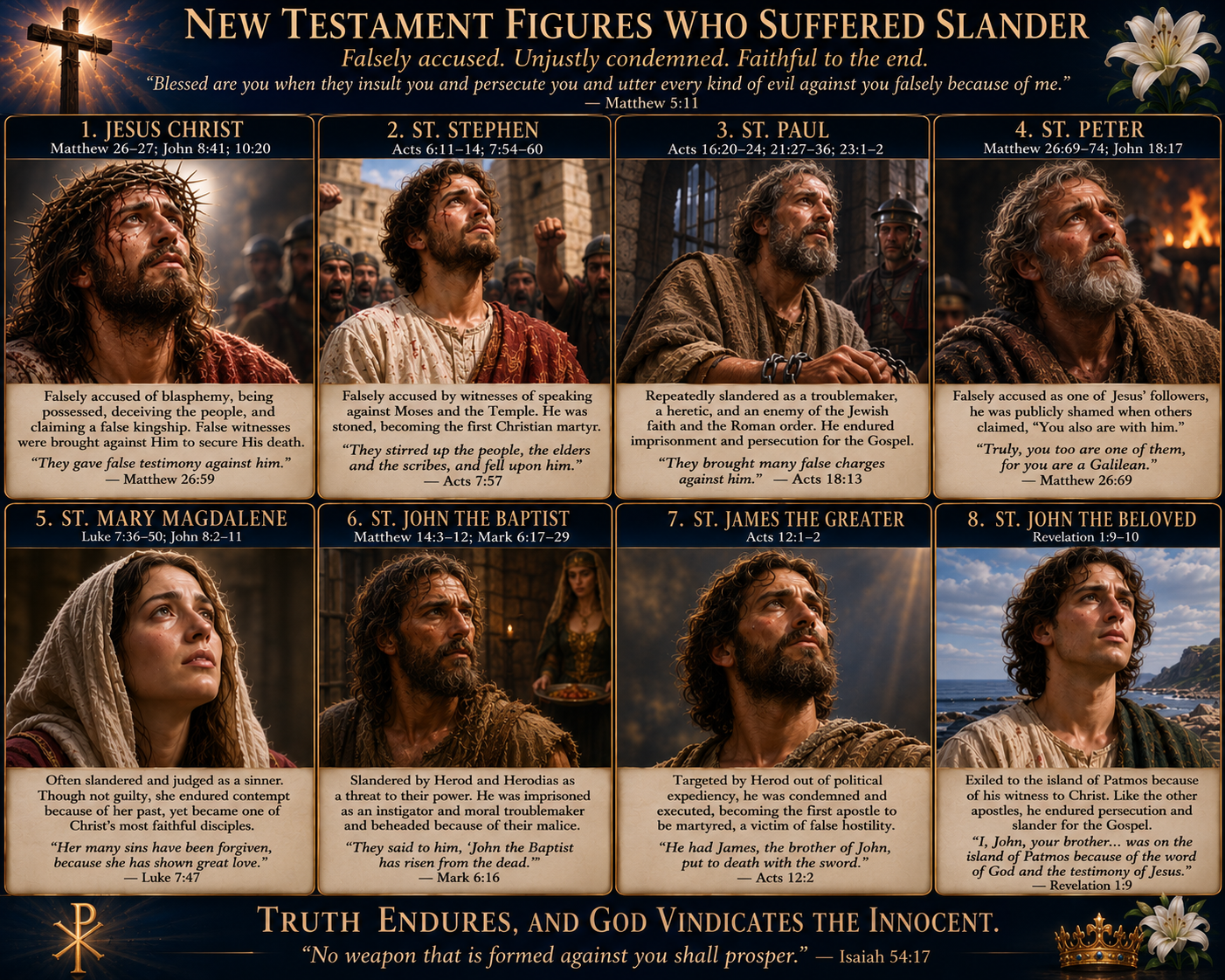
Truth is foundational to healthy psychological functioning. Human beings understand themselves, make decisions, build relationships, and navigate reality by forming beliefs about what is true. When those beliefs correspond to reality, they provide stability and allow individuals to act appropriately. When they are based on falsehood, the mind and emotions gradually become disordered because they are operating from an inaccurate understanding of reality.
For this reason, lies are psychologically destructive whether they are believed, spoken, or continually reinforced.
The human mind continually interprets experiences through deeply held beliefs. Psychologists often refer to these as core beliefs or schemas—fundamental assumptions about oneself, others, and the world.
When these core beliefs are false, they distort perception.
For example, a person who believes:
“I have no value.”
“No one truly loves me.”
“I am beyond forgiveness.”
“I will always fail.”
“People cannot be trusted.”
will unconsciously begin interpreting new experiences through those assumptions. Neutral events become perceived as rejection. Minor failures become proof of worthlessness. Genuine love becomes difficult to recognize because it contradicts the person’s established narrative.
Research in cognitive psychology has consistently shown that distorted beliefs contribute to depression, anxiety disorders, chronic shame, low self-esteem, and hopelessness. Individuals are often not responding primarily to reality itself but to the meaning they have assigned to reality through their beliefs.
This helps explain why two people can experience similar circumstances yet respond very differently. The difference often lies in the beliefs through which those circumstances are interpreted.
False beliefs therefore create unnecessary psychological suffering because they cause a person to live according to a distorted understanding of reality.
Speaking lies also changes the person who speaks them.
Every intentional lie requires a person to hold two competing representations of reality simultaneously: what is actually true and what is being presented as true. Maintaining this division places cognitive demands on memory, attention, and emotional regulation.
Research in neuroscience suggests that repeated dishonesty may also reduce emotional sensitivity to lying over time. One widely discussed study found that as participants repeatedly engaged in self-serving dishonesty, activity in the amygdala—a brain region involved in emotional processing—diminished, while the magnitude of dishonest behavior increased. Although this finding should not be interpreted as applying universally to every situation, it supports the broader observation that repeated dishonesty can become psychologically easier through habituation.
This process has long been recognized in moral philosophy.
Every lie weakens the natural inclination toward truth.
Every deception makes the next deception easier.
Every rationalization becomes more readily available.
Over time, dishonesty can become habitual rather than exceptional.
One of the most significant psychological consequences of habitual lying is internal fragmentation.
Healthy psychological functioning depends upon integration—when thoughts, beliefs, words, actions, and identity are consistent with one another.
Lying introduces division.
The person begins maintaining different versions of reality for different audiences.
Energy is spent remembering previous deceptions.
Relationships become increasingly difficult because trust requires authenticity.
The individual may eventually begin believing his own rationalizations, making honest self-assessment progressively more difficult.
This fragmentation often produces chronic anxiety because maintaining falsehood requires continual vigilance. There is always the possibility of exposure.
Truth, by contrast, requires no maintenance.
Reality remains consistent.
Perhaps the greatest psychological danger of repeated falsehood is that lies gradually become incorporated into identity.
This occurs whether the lies are spoken by others or by oneself.
When an individual repeatedly says:
“I am worthless.”
“I can never change.”
“No one cares.”
“I am nothing more than my failures.”
those statements do not alter objective reality, but they do influence subjective identity.
Likewise, when a person repeatedly tells himself lies that justify pride, resentment, selfishness, or dishonesty, those narratives gradually become the framework through which he understands himself.
Identity increasingly reflects the stories a person continually rehearses.
For this reason, psychologists often seek to identify and challenge distorted thinking patterns—not by encouraging comforting fantasies, but by helping individuals recognize what is objectively true.
Healing begins when false narratives are replaced with truthful ones.
Truth possesses an inherently integrating quality.
When a person’s beliefs correspond to reality:
Thoughts become clearer.
Emotions become more proportionate.
Decisions become wiser.
Relationships become more authentic.
Identity becomes more stable.
Reality no longer needs to be manipulated or avoided.
This does not mean that truth is always comfortable. Objective truth often requires admitting failure, acknowledging responsibility, grieving loss, or confronting painful circumstances. Yet these painful truths ultimately provide the only secure foundation upon which lasting healing can occur.
Psychological health is therefore not built upon positive thinking or self-created narratives but upon increasingly accurate perception of reality.
Human beings were created to know and live according to truth.
The intellect naturally seeks what is true.
The will naturally seeks what is good.
When falsehood repeatedly enters either faculty—whether through deception, self-deception, or habitual dishonesty—it impairs the person’s ability to perceive reality clearly and to choose wisely.
This is why lies are never merely incorrect statements.
They shape perception.
They influence emotion.
They alter behavior.
They form habits.
They affect identity.
Ultimately, both psychology and theology arrive at the same fundamental conclusion: the human person flourishes in truth because truth corresponds to reality. Falsehood, regardless of how persuasive or comforting it may initially appear, gradually separates the mind from reality and the person from authentic freedom.
For this reason, believing and speaking the truth are not merely moral obligations—they are essential conditions for psychological integration, healthy relationships, and human flourishing.

God often chooses to work through human speech.
Faith begins when truth is proclaimed.
“Faith comes from hearing.” (Romans 10:17)
Prayer lifts the heart toward God.
Confession of sin opens the soul to mercy.
Words of encouragement strengthen those who are weary.
Words of forgiveness heal wounds that no medicine can touch.
Even the ordinary conversations of daily life can become channels through which God reaches another soul.
Every spoken word reinforces a habit within us.
Repeatedly speaking:
Likewise,
Over time, our speech helps form our character because it continually exercises the virtues—or the vices—we choose.


Words are not only acts of communication; they are acts of the will.
Habitual speech rooted in hatred, blasphemy, lies, curses, or despair gradually disposes the soul toward darkness. Each repeated choice strengthens vice and weakens resistance to temptation.
Conversely, speech rooted in truth, gratitude, blessing, prayer, repentance, and praise strengthens virtue and makes the soul more receptive to grace.
The battle for the heart is often fought first through the tongue.
Scripture repeatedly commands:
“Bless those who persecute you; bless and do not curse them.” (Romans 12:14)
To bless another is to desire and ask for God’s goodness upon them, even when they have wronged us.
Blessing breaks the cycle of resentment.
Forgiveness silences hatred.
Gentle words soften hardened hearts.
The tongue was not created to destroy those made in God’s image, but to call forth the good that God desires for them.


The greatest dignity of the human tongue is to glorify God.
The Psalms continually proclaim:
“My tongue shall tell of your righteousness.”
Every prayer, every hymn of praise, every proclamation of truth fulfills the purpose for which speech was given.
The tongue reaches its perfection not when it speaks the most, but when it speaks in harmony with truth, charity, and the will of God.
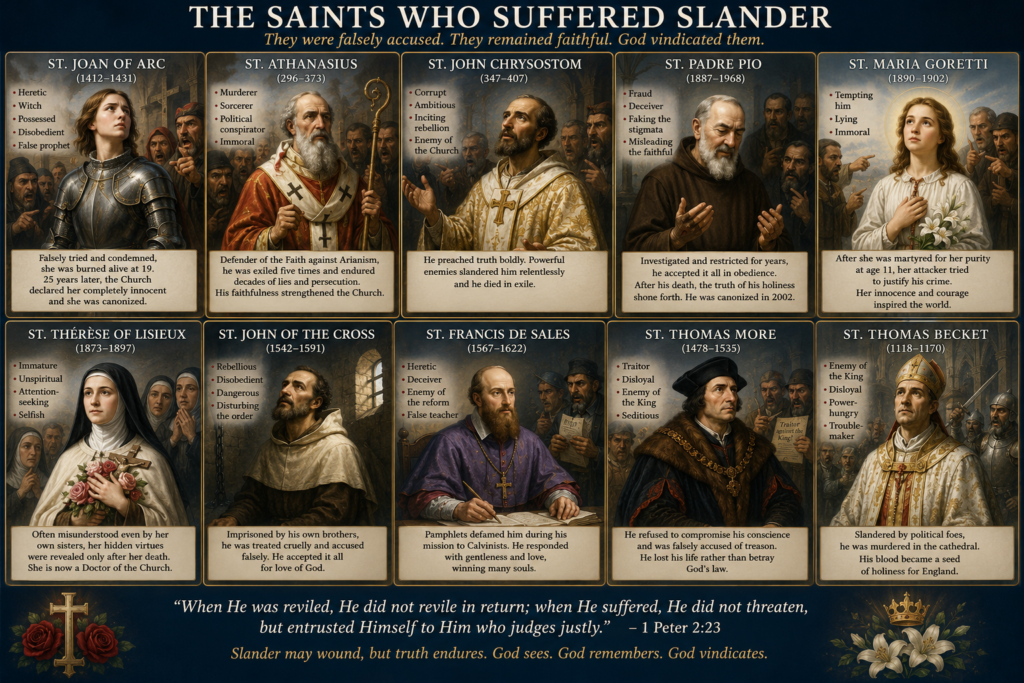
If truth is essential to psychological health, it is even more fundamental to the life of the soul.
The human soul was created for union with God, who is Truth itself. Every movement toward truth is therefore a movement toward God, while every deliberate movement toward falsehood is, to some degree, a movement away from Him. This is why Scripture consistently presents truth not merely as an intellectual virtue but as the very atmosphere in which the spiritual life exists.
Jesus declares:
“I am the way, and the truth, and the life.” (John 14:6)
Conversely, Satan is described as:
“A liar and the father of lies.” (John 8:44)
These passages reveal that truth and falsehood are not merely opposing ideas—they represent two fundamentally opposed spiritual realities.
The intellect was created to know reality as it truly is. When the intellect knowingly or habitually embraces falsehood, it becomes progressively less capable of perceiving reality clearly.
This process rarely occurs all at once.
A lie is first entertained.
It is then repeated.
Eventually it is accepted.
Finally, it becomes part of the lens through which reality itself is interpreted.
As falsehood becomes more deeply rooted, it distorts a person’s understanding of God, of self, of others, and of the moral order. What is objectively good may begin to appear burdensome, while what is objectively evil may appear attractive or even virtuous.
Scripture repeatedly describes this condition as a darkening of the mind.
St. Paul writes that those who rejected the truth became “futile in their thinking” and that “their senseless minds were darkened” (Romans 1:21). Elsewhere he speaks of those who are “darkened in their understanding, alienated from the life of God” (Ephesians 4:18).
This darkness is not merely a lack of information. It is a spiritual disorder in which the intellect increasingly loses its capacity to recognize truth because it has become habituated to falsehood.
Every deliberate lie is an act of the will against truth.
Because virtues and vices are strengthened through repeated acts, every intentional deception reinforces the vice of dishonesty.
Over time, lying becomes easier, not because truth has changed, but because the conscience has become less responsive. The person gradually loses sensitivity to the disorder of falsehood. What once produced interior conflict may eventually seem ordinary or even necessary.
This process affects more than behavior.
It forms character.
The person does not simply tell lies.
He gradually becomes a dishonest person.
Likewise, one who consistently speaks truth, even when it is costly, gradually becomes truthful in character.
The soul is continually being formed by the choices it repeatedly makes.
Every sin wounds the relationship between the soul and God, but lies possess a particular gravity because they directly oppose God’s own nature.
God cannot deceive.
God cannot contradict Himself.
God is perfect truth.
To knowingly reject truth is therefore to reject, in some measure, participation in the divine life.
This is why Scripture consistently links truth with freedom.
Jesus teaches:
“You will know the truth, and the truth will make you free.” (John 8:32)
Freedom is not merely the ability to choose; it is the capacity to live according to reality. Lies promise freedom while producing slavery. A person who continually embraces falsehood becomes increasingly bound—to deception, rationalization, fear, pride, and self-justification.
The more one departs from truth, the more difficult genuine repentance becomes, because repentance begins by honestly acknowledging reality before God.
Falsehood is never purely private.
Every lie has the potential to distort another person’s understanding of reality.
A lie may destroy trust.
A false accusation may damage a reputation.
False teaching may lead others away from the truth.
A rationalized sin may encourage another to commit the same evil.
Scandal, deception, and slander all demonstrate that falsehood can influence not only the speaker but also the spiritual lives of others.
For this reason, Scripture treats sins of the tongue with exceptional seriousness. They possess the capacity to multiply, affecting families, communities, and even generations.
The spiritual significance of truth extends beyond this present life.
Scripture teaches that our eternal destiny depends upon our response to God, who is Truth itself. Heaven is the perfect vision and possession of Truth; therefore, nothing opposed to truth can coexist with it.
The Book of Revelation describes the heavenly Jerusalem as a place into which “nothing unclean shall enter,” and specifically states that those who persist in falsehood exclude themselves from that communion (Revelation 21:27; 22:15). The point is not that every lie is equally grave, but that a soul permanently attached to falsehood is not yet disposed for perfect communion with the God who is Truth.
Every deliberate lie therefore has an eternal dimension. It is not merely an inaccurate statement but a moral act that either strengthens or weakens the soul’s conformity to God.
Conversely, every act of truthfulness—even when it requires sacrifice, humility, or suffering—forms the soul in the likeness of Christ, who came “to bear witness to the truth” (John 18:37).
The spiritual life is ultimately a continual conversion from falsehood to truth.
This includes rejecting lies about God.
Rejecting lies about ourselves.
Rejecting lies about others.
Rejecting lies that excuse sin.
Rejecting lies that justify hatred.
Rejecting lies that produce despair.
To live in truth is to allow every part of one’s life to be brought into conformity with reality as God sees it.
For this reason, the struggle for truth is not merely an intellectual pursuit; it is the very path of sanctification. Every step toward truth is a step toward God. Every surrender of falsehood is a participation in the freedom Christ came to give. In this life, truth purifies the soul. In eternity, it prepares the soul for perfect communion with the One who is Truth Himself.

Salvation comes through Jesus Christ alone, yet our words reveal whether our hearts truly belong to Him.
St. Paul writes:
“If you confess with your lips that Jesus is Lord and believe in your heart that God raised him from the dead, you will be saved.” (Romans 10:9)
Faith is meant to be lived, and living faith naturally speaks.
Words of repentance draw us back to God.
Words of forgiveness free both ourselves and others.
Words of truth bear witness to Christ.
Words of praise glorify the One for whom we were created.
At the same time, persistent lies, hatred, blasphemy, and unrepentant speech opposed to truth gradually harden the heart against grace.
The tongue does not determine salvation by itself, but it faithfully reveals the direction of the soul.
Before speaking, it is wise to ask:
Every conversation is an opportunity either to cooperate with grace or to resist it.
The tongue is one of the smallest members of the body, yet one of the greatest powers entrusted to man. It can become an instrument of healing, truth, peace, and worship—or of division, deception, and destruction.
As St. James reminds us:
“With it we bless the Lord and Father, and with it we curse men, who are made in the likeness of God… My brethren, this ought not to be so.” (James 3:9–10)
May our words become a reflection of transformed hearts, speaking truth with charity, blessing instead of cursing, and glorifying God in all things.


Lying, slander, calumny, and detraction differ from many other sins because they often continue causing harm long after the words have been spoken. A stolen object can be returned. Physical injuries may heal. But a false statement can continue influencing people’s judgments for years, even after the speaker has repented.
For this reason, repentance requires more than sorrow for having lied. It also requires a sincere commitment to repair, as far as possible, the damage that the lie has caused.
This principle rests on justice.
When a person knowingly spreads falsehood about another, he has not only offended God by violating the truth; he has also deprived another person of a real good: his reputation. A person’s good name is part of the justice owed to him. Reputation influences relationships, employment, trust, family life, and standing within the community. To unjustly damage it is to take something that does not belong to us.
Justice therefore requires that, when reasonably possible, the harm be repaired.
This is the same principle that applies to every other violation of justice. A thief should return what he has stolen. Someone who damages another’s property should make restitution. Likewise, someone who knowingly destroys another’s reputation should seek to restore it as far as possible.
This obligation is reflected throughout Scripture.
After encountering Christ, Zacchaeus declared:
“If I have defrauded anyone of anything, I restore it fourfold.” (Luke 19:8)
His repentance was demonstrated not merely by regret but by his willingness to repair the harm he had caused.
The same principle applies to falsehood.
If a lie has caused others to believe something untrue about another person, justice ordinarily requires that the liar correct the falsehood with those who were misled, insofar as doing so is possible and prudent.
This is not simply an external requirement. It reveals whether repentance has reached the will.
A person who says, “I am sorry for lying, but I will allow everyone to continue believing the lie because correcting it would embarrass me,” has not yet fully rejected the injustice. The original falsehood continues accomplishing precisely what it was intended to accomplish.
By contrast, a person who is willing to humble himself by admitting, “What I said was false,” demonstrates that he now values truth more than his own pride or reputation.
This act of restitution is often one of the deepest forms of repentance because it directly opposes the vice that gave rise to the sin. Lies frequently spring from pride, fear, anger, jealousy, or self-interest. Correcting the lie requires humility, courage, love of truth, and concern for the good of the person who was harmed.
The Church therefore teaches that genuine repentance includes both sorrow for sin and a firm purpose of amendment. Where a sin has caused injustice, that purpose ordinarily includes a willingness to make restitution according to one’s ability.
This does not mean that every consequence can always be undone. Some lies spread too widely to be completely corrected. a person remains bound to repair the harm as far as reasonably possible through whatever means are available. For this reason, a priest may counsel a penitent on the most prudent way to make restitution. The obligation is not to accomplish the impossible but to sincerely do what justice and charity require.
authentic repentance necessarily desires to set right, as far as possible, what sin has made wrong. Love of truth naturally seeks to undo the damage caused by falsehood. In this way, correcting a lie is not merely a legal requirement. It is an expression of conversion. The same tongue that once injured another becomes the instrument by which truth is restored, justice is served, and charity begins to heal the wounds that falsehood created.
St. Augustine taught that true repentance cannot remain merely interior. Genuine sorrow for sin naturally seeks to repair the harm that sin has caused. A heart that has truly turned back to God does not ask only, “Have I been forgiven?” but also, “How can I restore what I have damaged?” Repentance is proven by a love that desires to heal the wounds left behind.


St. Thomas Aquinas teaches that whenever another person has been unjustly deprived of what is rightfully theirs, justice ordinarily requires restitution. This principle applies not only to material possessions but also to a person’s good name. Reputation is a real human good. One who has unjustly damaged another’s reputation through lies or calumny is bound, insofar as possible, to restore it. To seek forgiveness while refusing to repair an injustice is contrary to the virtue of justice.
Reflecting on the sins of the tongue, St. John Chrysostom exhorts that the same mouth which inflicted the wound should become the instrument of healing. If our words have harmed another, charity requires that our words also be used to restore truth, defend the innocent, and repair the injury. Silence is not enough where justice calls for correction.


St. Alphonsus teaches that authentic contrition always includes a firm purpose of amendment. This purpose extends beyond avoiding future sin; it includes a sincere willingness to repair, insofar as possible, the harm already caused. A person who refuses restitution where it is possible demonstrates that attachment to the sin has not yet been fully abandoned.
When Zacchaeus encountered Christ, he did not merely confess that he had sinned. He immediately declared his intention to restore what he had unjustly taken, even beyond what justice strictly required (Luke 19:8). His restitution did not earn God’s mercy, but it revealed that his heart had truly been converted. Authentic repentance always bears concrete fruit.


St. Catherine teaches that love of God and love of neighbor cannot be separated. If love has truly returned to the heart through repentance, it naturally seeks to heal whatever it has wounded. To ignore the damage caused by one’s sins while claiming to love God is inconsistent with the nature of charity itself. Love desires restoration because love desires the good of the other.
St. Francis de Sales reminds us that pride resists admitting wrong, while humility rejoices in truth. Making restitution is often painful because it requires confessing our faults before those we have injured. Yet this very humiliation becomes a remedy for pride. God often uses the work of reparation not only to heal the one who was harmed but also to purify the one who caused the harm.

Copyright © MPowerMen, LLC | 2026 | All rights reserved.
All advice related to fitness, nutrition, or lifestyle changes is based on certifications such as the International Sports Sciences Association or other coaching or consultant certificates and is not a substitute for professional medical advice, diagnosis, or treatment. Clients should consult a licensed healthcare provider, dietitian, or other qualified professional before making significant changes to diet, exercise, or lifestyle routines.
Some MPowerMen content may be generated using AI for general commentary, reference, or informational purposes and should not be relied upon as professional advice. Given the evolving nature of AI technology, users are strongly advised to independently verify all information. MPowerMen content is provided “as-is” without warranties, express or implied, and to the fullest extent permitted by law, MPowerMen and its affiliates disclaims all liability for inaccuracies, omissions, or any losses or damages arising from the use of this website or reliance on its content. Any links to third-party sources or websites are provided for convenience only and do not imply endorsement or any guarantee of their accuracy, and MPowerMen does not assume responsibility for any of their content or policies. Additionally, any references to third-party companies or brands does not imply endorsement or affiliation unless stated.
Statements related to health, diet, supplements, or similar topics have not been evaluated by the FDA or any health authority and are not intended to diagnose, treat, cure, or prevent any condition. Users should consult a licensed healthcare professional before making health-related decisions. Opinions expressed on this site may not necessarily reflect those of MPowerMen.
For questions, corrections or more information about our affiliations or partnerships, contact us.
The MPowerMen Coach(es)/Trainer(s) is not a licensed medical, legal, or mental health professional, nor an athletic trainer, dietitian, or therapist, and does not provide professional advice in these areas. Clients are strongly encouraged to consult appropriate professionals for specific needs.
Participation in suggested activities, programs, or plans is voluntary and at the Client’s own risk. Clients are responsible for ensuring proper workout attire, functional and safe equipment, and notifying the Coach(es)/Trainer(s) of any discomfort during activities.
The Coach(es)/Trainer(s) is not liable for injuries, damages, or losses resulting from participation or reliance on recommendations. Clients assume all risks associated with the Services and agree to indemnify the Coach(es)/Trainer(s) against claims, actions, or demands arising from Services.